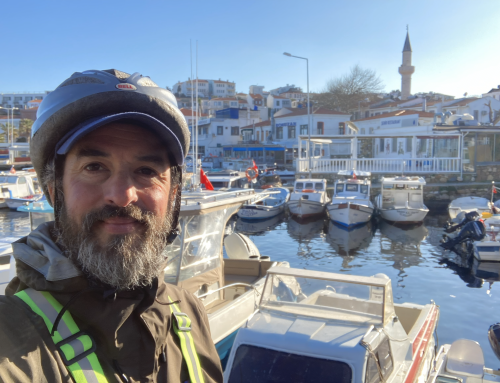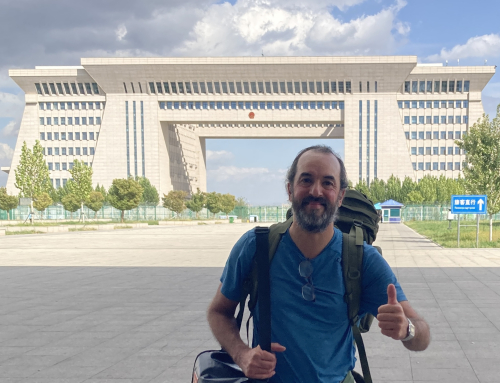

Impressions of India
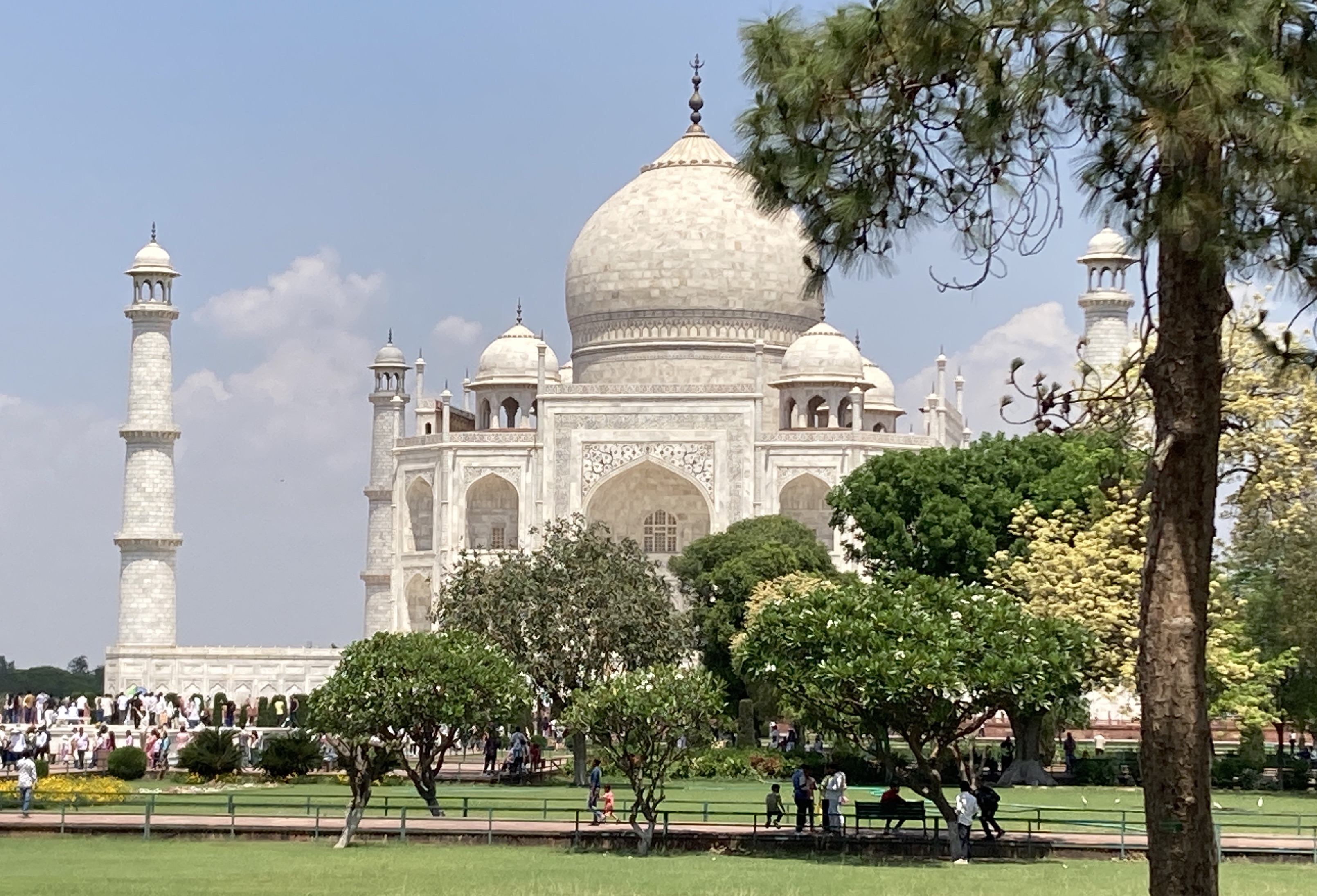
The Taj Mahal, a monument to love
Image: Mukti Mitchell
I’m on the long train ride across Kazakhstan again, East to West this time, with fifty-five hours of peaceful trundling across vast landscapes. I have completed half the journey from Delhi to Devon, yet barely moved an inch to the West! That’s thanks to an enormous detour through China – the only current viable route. More on that in the next mailing. Today, I want to share some impressions of India.
India, India. Land of deserts and jungles, three seas and holy rivers. Places that reach 50 degrees in summer and the coldest habitation outside the sub-polar regions. Every great religion, countless sects, over 400 languages and 2,000+ ethnic minorities. Its population is bigger than the USA, Europe and Russia combined. This sometimes-seeming chaos contains the most reliable lunchbox delivery system in the world and a train network that carries 23 million passengers a day, while serving them three meals with options for veg, non-veg or vegan.
Nine lifetimes would not be enough to get to know this nation, never mind nine months. So I’m calling this “impressions” – brief musings on how India impressed herself on my heart, mind and soul.
I love camels because of all the animals I have met, they stare longest into my eyes in a way that suggests they want to know who I really am. At the Pushkar camel fair, the camels were less interested in me than the sadhus in the shade of the great banyan tree on the lake’s Southern steps, whose singing and drumming made it clear as a bell that music is really all about the feeling.
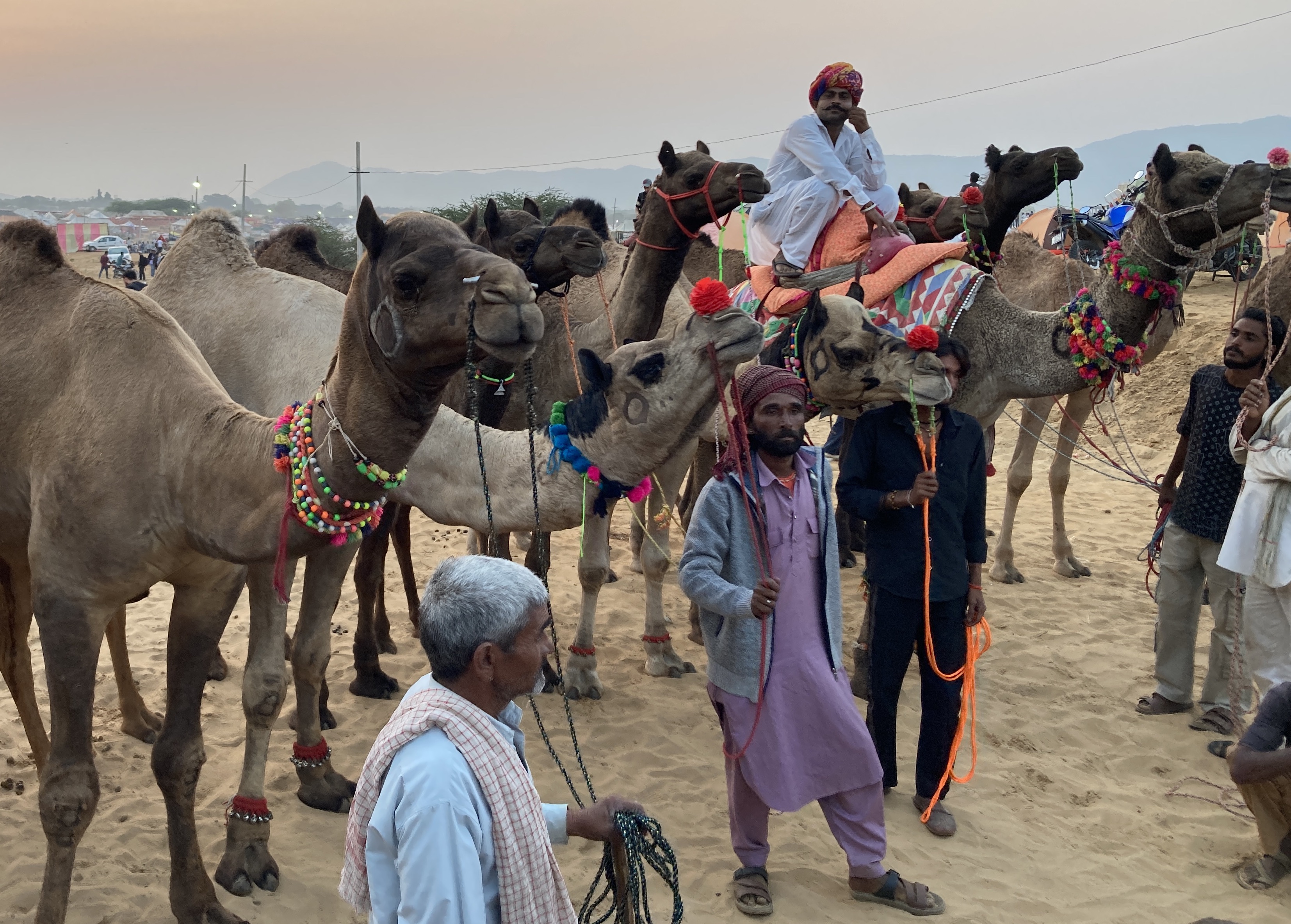
The Camel Fair at Pushkar
Image: Mukti Mitchell
The Buddha gained enlightenment in Bodhgaya, where the temple staff deposit the phones and bags of thousands of daily visitors completely free of charge. In the temple gardens, throngs of pilgrims sit in earnest contemplation while their mantras, in the many languages of Southeast Asia, meld in the tranquil air. Sitting solo in mosquito-net tents or in the open in groups of a hundred or more, going about their practices in total acceptance of each other’s differences, there was a relaxed and pervading air that they too seemed to know what “it” is really all about.
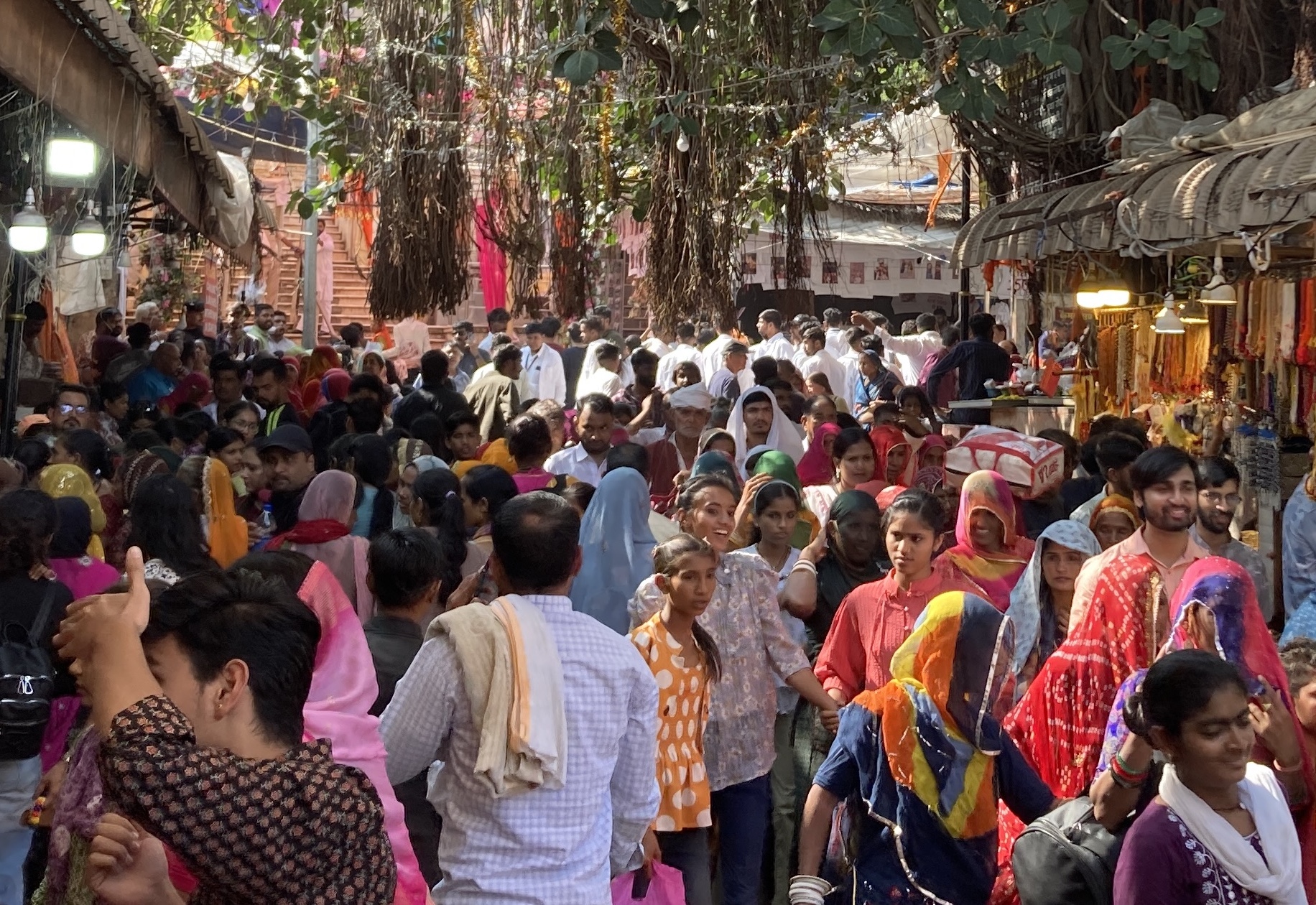
Festival crowds near Pushkar’s Brahma Temple
Image: Mukti Mitchell
My next stop was the Punjab. A frontier state and the principal entry point through India’s fortress wall of the Himalayas, Punjab has received invasions and foreign conquests long before Alexander the Great. Fed up with these intrusions and the impact on their womenfolk, the Punjabis developed a warrior culture. The men grow their hair and wrap it in a tight turban, learn sword skills and carry a knife to show they are ready to fight at any time. Yet they are so focused on protection, and not aggression, that I always felt completely safe around them. A young religion founded just 500 years ago, the Sikhs now worship the book prescribed by their 10th guru, give 10% of their income to charity, and their temples offer food and accommodation to all. The Golden Temple in Amritsar feeds 100,000 people a day!
A friend, Sumeet, invited me to visit farm soil regeneration projects, and I was impressed by their dedication as well as openness to new knowledge. I was able to contribute the carbon story, which is that healthy soil has 5% organic matter, industrial farms have only 1%, and when it reaches zero, soil becomes desert. Punjab has been the grain basket of India for 50 years, and the soils are down to 0.5% organic matter. Indians move quickly, operating by phone instead of email, and I was amazed at how the carbon story spread and meetings were arranged like wildfire. It was not long before Sumeet and I were sat with the State Food Commissioner, who took up the message with fervour.
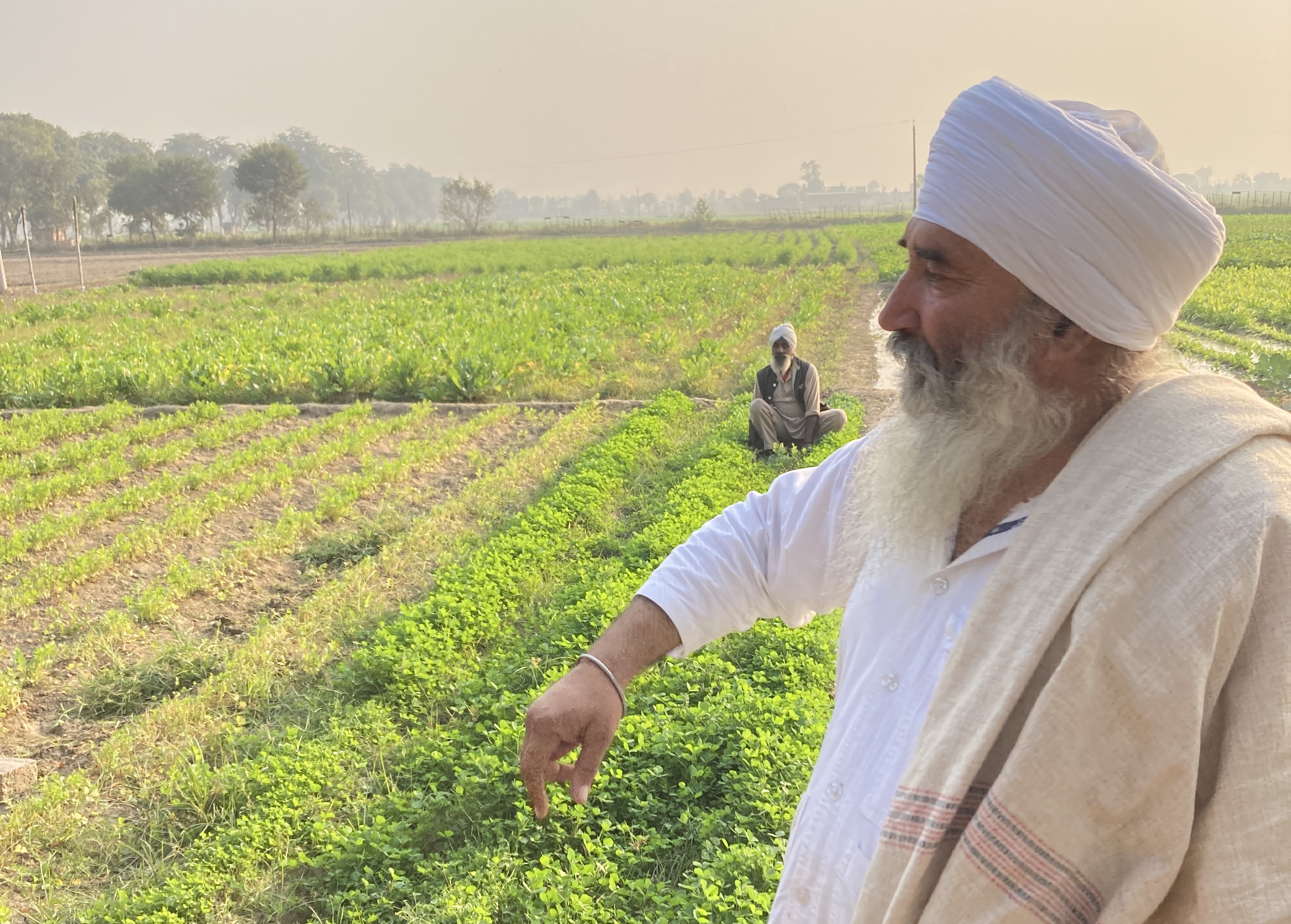
A Punjabi Farmer
Image: Mukti Mitchell
Arriving by land had only permitted me a three-month initial visa, so I took the long train ride South to visit Sri Lanka. Like a cross between India and a Caribbean Island, the winter weather was warm and windy, the people friendly and relaxed, and the food fresh and provincial. It was perfect for my first long rest in several months.
Long wanting a health reset at 52, I returned to India through Tamil Nadu, and the famous ayurvedic health retreat known as “Panchakarma.” Ayurveda is the ancient Indian system of health, and Panchakarma means five forms of detox. Prejudiced to think anything important must be a strong experience, I was disappointed at first by the gentle subtlety of my treatment. But slowly it dawned on me that my problem was an excess of extremes, and the solution was to calm my system down and operate within a smaller bandwidth. From daily massages to mellow meals and sweet-spiced milk baths, I slowly got the message, and the Rosacea on my cheeks notably receded.
One of my most beautiful memories of India was the day I spent at Madurai’s magnificent Meenakshi Temple. The temple is vast and beautiful, but what made it so special was just giving myself the rest of my time to explore. I had no plans for that day, the next day, or any other day, and nothing at all booked for the rest of my life. Time seemed to stand still, and I wandered the temple corridors, gazing for as long as I liked at the stone carvings and statues, and simply soaking up the vibe.
What I love about Sanatana Dharma, “The Eternal Way” (subsequently called Hinduism by Western visitors), is that it seems to be the most democratic, DIY, inclusive, gender-balanced, and tolerant spiritual approach I have come across, which respects and embraces nature and sexuality. There are countless goddesses and gods, and more deities than the villages of India, which number over 500,000. Its roots go back over 10,000 years, and its history is intertwined with Jainism and Buddhism in such a way that some say they are inseparable. What strikes me is that almost everyone I speak to seems quite clear that there is one god and all representations of that god are simply representations. So it doesn’t matter what representation you prefer, or even what religion, because the point of all these icons and practices is very simple: They are only there to help you get the feeling of connection with the divine, and it is your experience which matters. To help you connect with the divine as often as you want, there are temples and shrines on street corners, under trees and in homes, and everyone is welcome to connect with them in their own way, whenever they want. I felt so welcome to visit and say any prayer that came to my mind – usually a word of thanks for the kindness of the people around me and my good fortune – that I did so often and enjoyed it more and more.
In Tiruvanamalai I strolled to the temple gates on Shiva’s birthday. Drawn in by the enthusiasm of the crowd, I queued from 9 pm to 4 am among relaxed and chatty temple-goers to receive a blessing in the inner sanctum. There, the intensity of the atmosphere combined with the way people did anything they wanted – bow, chant, prostrate, or find a corner for a nap – left a wonderful impression of spiritual freedom. On the hill above his nearby ashram, the silent saint Ramana Maharishi left an ever-tranquil atmosphere where I joined his followers, finding solace in moments of meditation.
Deep in Rajasthan’s Thar Desert lie Sri Dungargarh and Ladnun, my father’s hometown and monastery. Way off the tourist trail, the people there are wonderfully unassuming, and I loved the atmosphere of the desert – sandy hills as far as the eye could see, dotted with wizened shrubs and trees, yet somehow wonderfully cosy. Ladnun’s exquisitely carved Havelis (villas) made me want to start a town regeneration project, and the nearby rural villages were the cleanest places I saw in India.
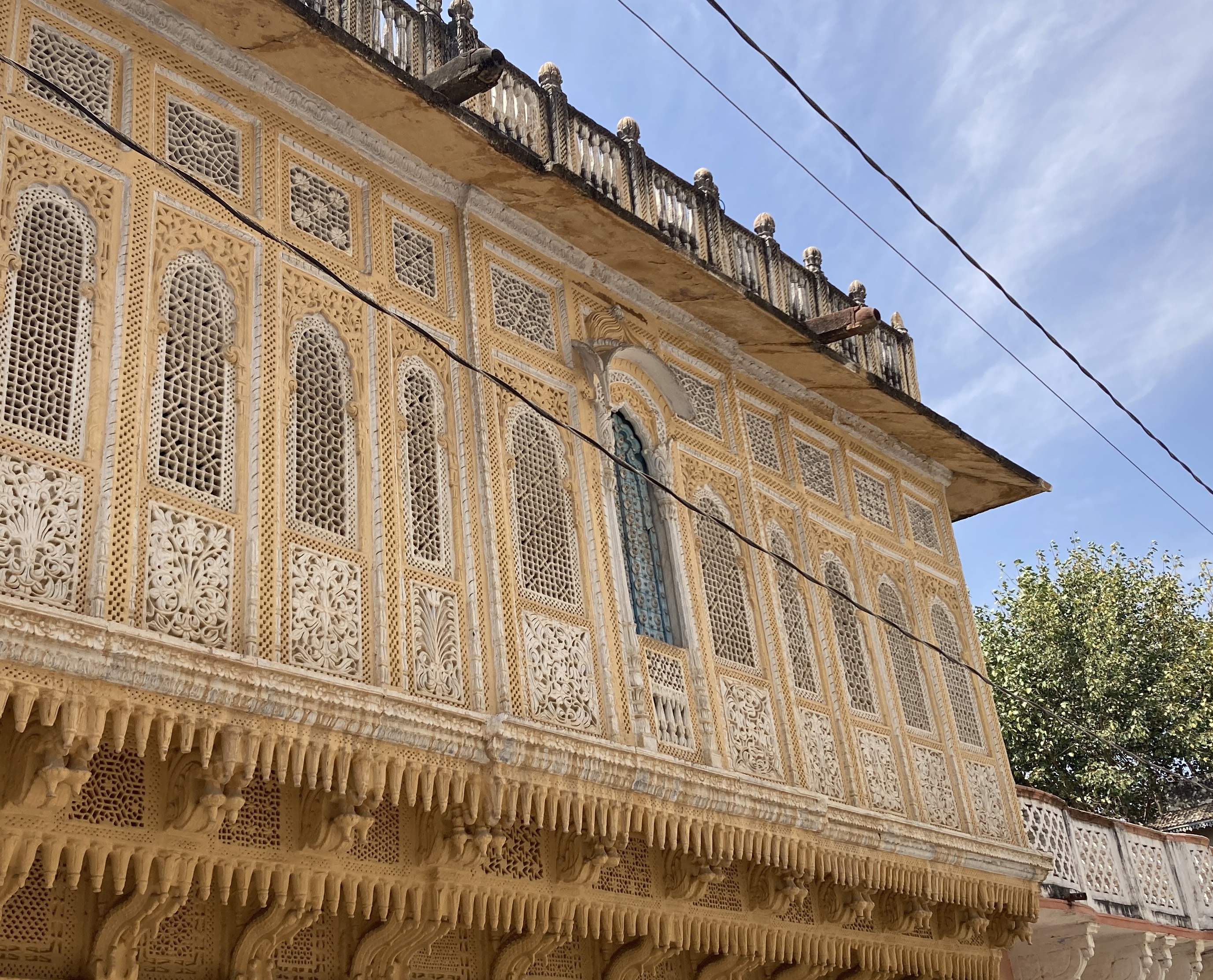
An exquisitely carved Haveli in Ladnun
Image: Mukti Mitchell
As Spring broke into summer, the heat became so intense that I only went out at dawn and dusk. But I couldn’t miss Varanasi. So I toughed it out to walk her winding back streets, dusty and vibrant with an old saying attributing the city “more temples than grains of rice in a bushel”. My love of boats was fulfilled by the wooden craft on the great Ganga, but to my surprise they all seemed to go backwards, high bows at the rear!
Heading for the mountain cool of Leh, Ladakh, I found the roads still snowbound in May! So I settled near the Dalai Lama’s home in Dharamshala. The Himalayas were impressive, so steep they could barely be climbed, and the winding paths went forever upwards, making the smiling red-robed monks strong in body and spirit. Monsoon rains soon arrived, gushing from the skies in torrents that drummed on the roof and obscured the views with thundering droplets and occasional hail. My hosts Muna and Shivam offered homemade organic food and yoga classes so sweet and humble I sometimes sat afterwards and cried.
India set the yeast in me to rise, and kneaded me time and again. There is still poverty, and to see uncared-for souls languishing in the gutter brings tears to my eyes. A thousand years of foreign rulers have left a profound mark, and embracing a colonial infrastructure does not lend itself to equality. Thich Nhat Hanh says “No mud, no lotus,” and out of the mud, beautiful lotuses are growing. India has a sense of direction, and that creates solidarity. Indians understand efficiency like no others. Eking every extra kilometre-per-litre from a scooter with a family of four on board is just one way that Indians achieve a carbon footprint a quarter of that of the average European. Fixing anything that’s fixable and keeping old trucks and buses going forever. All the while, simple, healthy food is served on every bustling street in the nation.
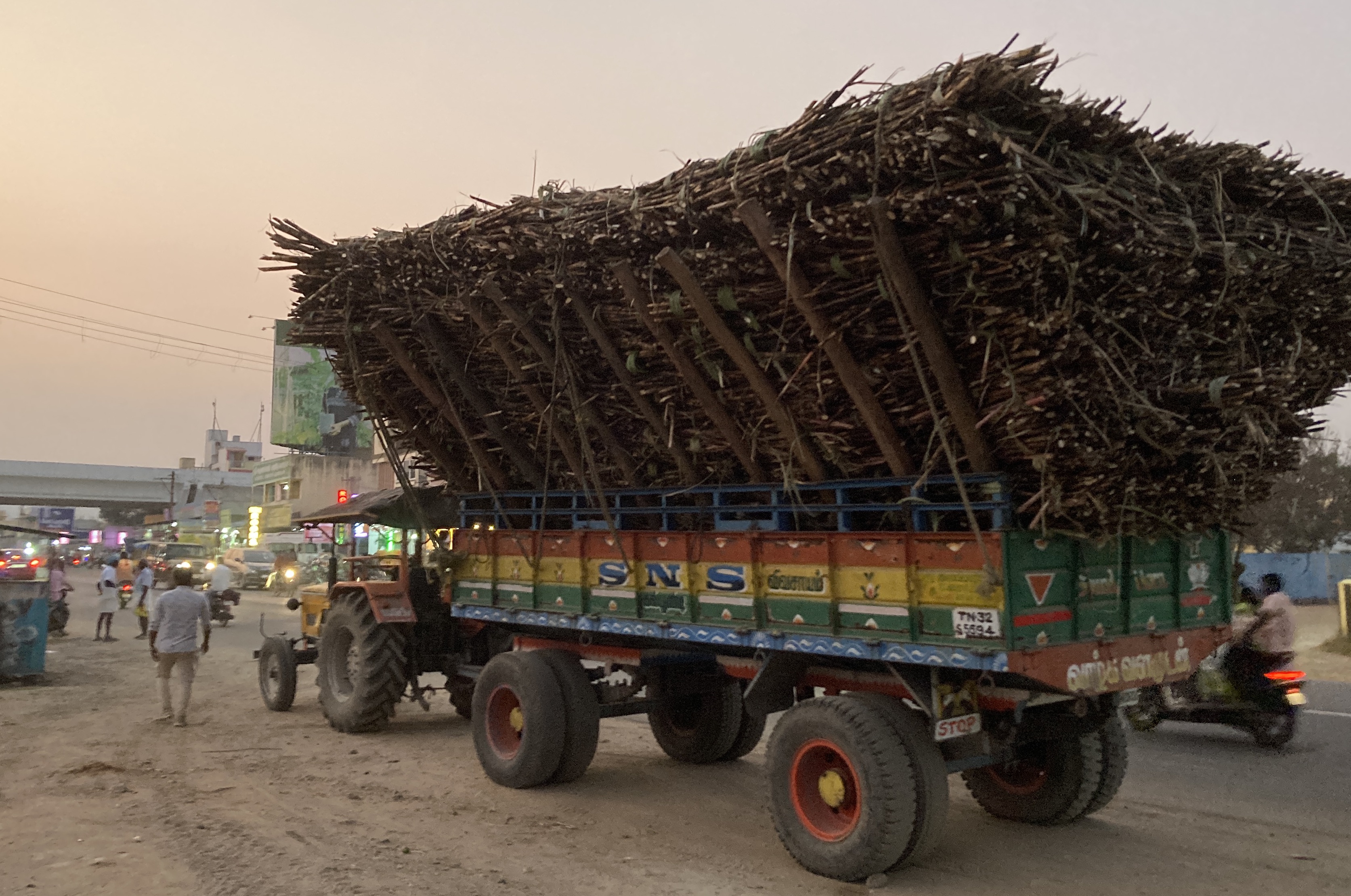
Efficiency – How to load a trailer
Image: Mukti Mitchell
India seems to give great value to beauty and femininity. The Taj Mahal is the most beautiful building I have ever seen, and it fits that it is a monument to love. Khajuraho speaks of a civilisation that celebrated all aspects of life and placed sex equally among them. The length of the nation, the women of India bring beauty to every setting, the designs and colours of their saris brightening up squalid bus stations and turning pastoral scenes into works of art.
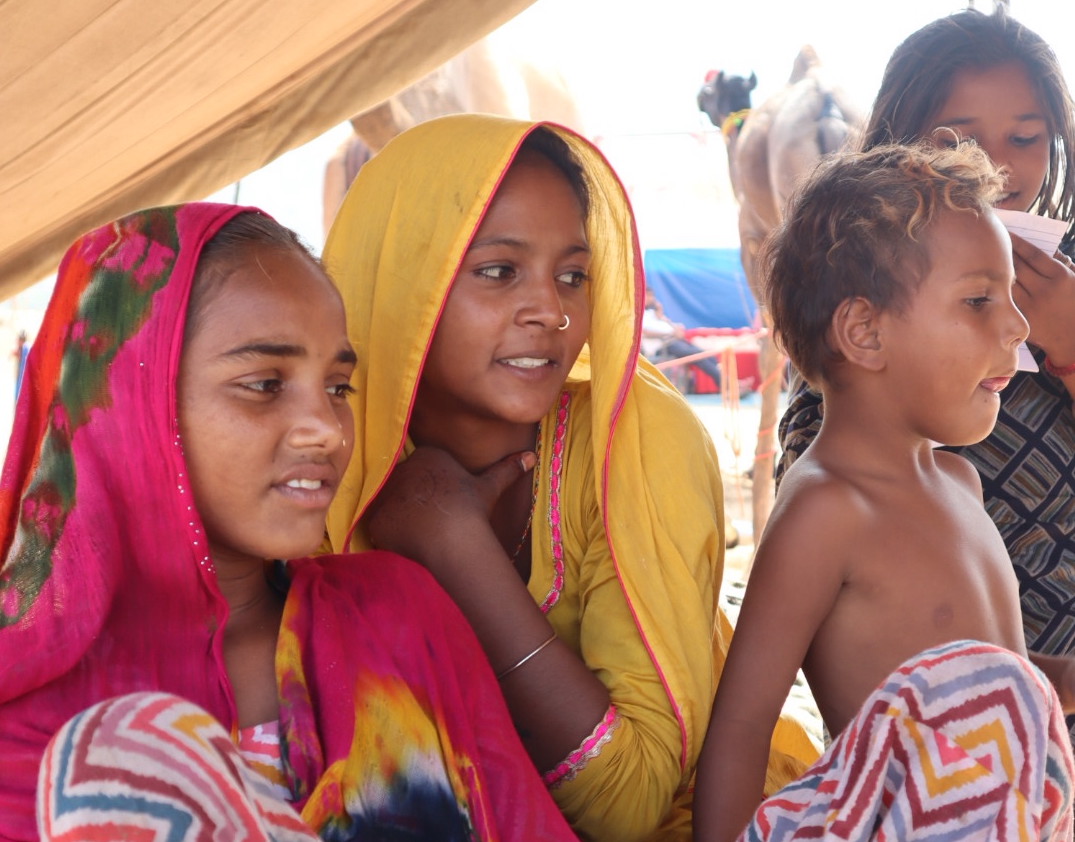
Colourful Saris of the women of India
Image: Mukti Mitchell
Perhaps most valuable of all, India helped me learn to be more humble and enjoy it. It is as if Indians know that life is full of ups and downs, and the trick is enjoying it all. Being in India wasn’t always easy, but it raised my tolerance levels, helped me relax, improved my health, and showed me that there are infinite ways to connect with the divine, in any moment, on any day. In the end, perhaps it’s all about the feeling. I feel deeply grateful for my time in this great land.
Next steps
Sign up to our mailing list for more tips on enjoyable, low carbon living
Calculate your footprint for the first time or update it for the recent year
Send this article to a friend you think would enjoy it – Check out the ‘Share This Article’ options below!