
Real Business Footprints

A watch and watchstrap retailer calculates their carbon footprint
Image: Kampus Production, Pexels
A rare look inside some real business carbon footprints.
If you have not done a business carbon footprint before, it can be hard to imagine what it would look like. In this article, we dive into three real-life examples to find out what it’s all about, with Carbon Savvy’s business footprint partner, Eoin McQuone. As well as the sources of emissions, we explore the best actions to save carbon and the additional benefits this can bring a company. While these are operating companies and the data is real, we have kept them anonymous.
Amazing Architects
After an initial fact-finding Zoom call with Eoin and the team, Amazing Architects spent a few weeks gathering the data they had from sources like supplier invoices, vehicle mileage meters and a staff questionnaire on commuting habits. All the data was entered into Eoin’s calculator, and hey presto! – the carbon footprint appeared.
 An architectural firm meeting to calculate and reduce its business carbon footprint
Image: Thirdman, Pexels
Amazing Architects’ baseline carbon footprint (the first one calculated) was 329 tonnes of CO2e (e stands for equivalent, which means it includes other greenhouse gases like nitrous oxide, converted to its carbon dioxide equivalent). To compare companies of different sizes operating in the same industry, “carbon intensities” are used, which create a level playing field. Two of the most common carbon intensities are emissions per employee and emissions per £million turnover (this still works for companies with less than a million turnover). Amazing Architects have 107 employees, giving a carbon intensity of 3.1 tonnes CO2e per person. With a turnover of £9.5m, their other intensity was 34.6 tonnes CO2e per £million.
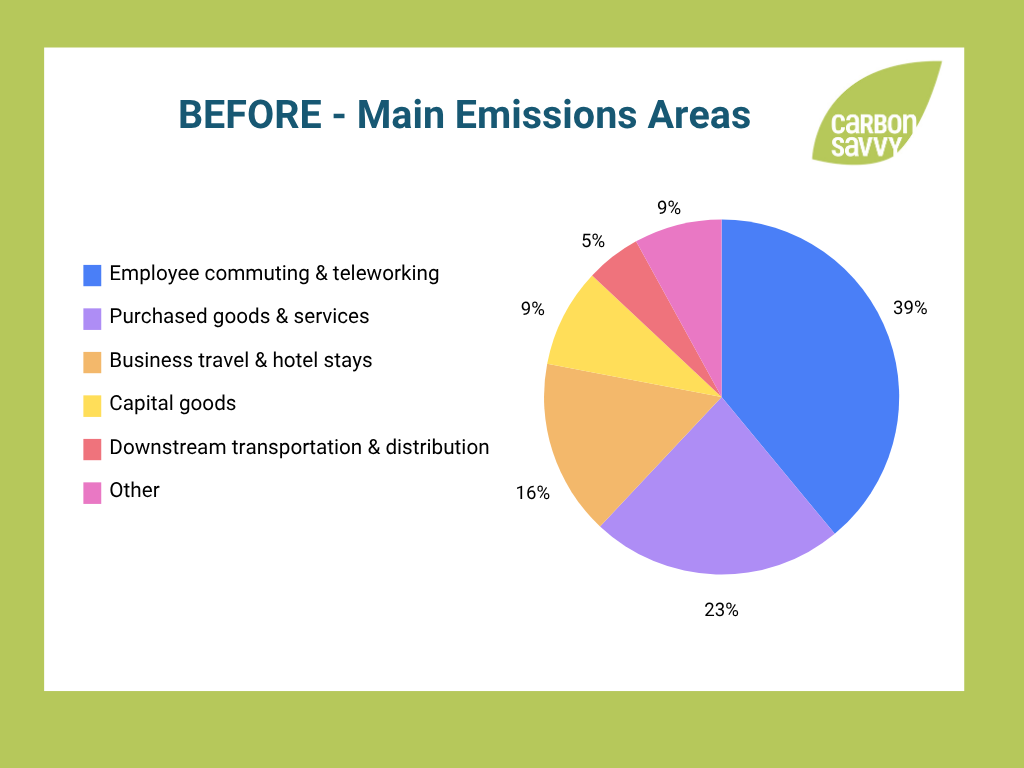
Unlike financial accounting, the main objective with carbon accounting is to help a company reduce its emissions. Hence, one of the most important things to know is what the main sources of emissions are. Amazing Architects’ main sources were: Employee commuting & teleworking 39%, purchased goods and services 23%, business travel & hotels 16%, capital goods 9%, downstream transportation & distribution 5%, and other smaller emissions 9%.
Once the company had absorbed the new data, the next step was a discussion with Eoin to work out the top five actions they could take to reduce their carbon footprint over a five-year timeframe. For Amazing Architects, the best actions and associated carbon savings were: Incentivise employees to use public transport or carshare (12%), source low carbon goods and encourage suppliers to decarbonise (10%), purchase refurbished IT equipment (9%) and introduce a “public transport first” business travel policy (8%). Put together, these actions reduced the company’s footprint by an amazing 38%. The reduced carbon footprint looked like this:

This is where it gets interesting, because as well as saving carbon, these activities have other benefits. Let’s look at incentivising staff to take public transport – here are three possible ways they could do this. The first was to buy staff a monthly bus pass for £70. That is effectively an annual pay rise of £840 tax-free, which is quite an incentive. Add their savings on petrol and parking, and it could buy a lot of loyalty. The second option is to reserve the limited on-site parking for carshare vehicles – a great motivator in a busy city centre. The third is the bike-to-work scheme in which the company pays for a bike and recovers the cost in instalments through the employee’s salary. Both the company and employee get the tax back on the cost of the bike, which would save the company £150 on a £1000 bike.
When it comes to purchasing low carbon goods and encouraging suppliers to decarbonise, the cost-benefits are more case-specific. Some low carbon materials are more expensive, but certain customers are willing to pay more for them, and it can win business when all other things are equal. Engaging with suppliers builds stronger relationships, which can have other benefits.
Introducing a “public transport first” business travel policy can have a big effect on your footprint because rail transport emits 80% less than car travel on average. With reimbursement for car travel now at 55p per mile in the UK, the train tickets can save 25-45p per mile, which can add up to a significant saving over the year.
Marvellous Manufacturing
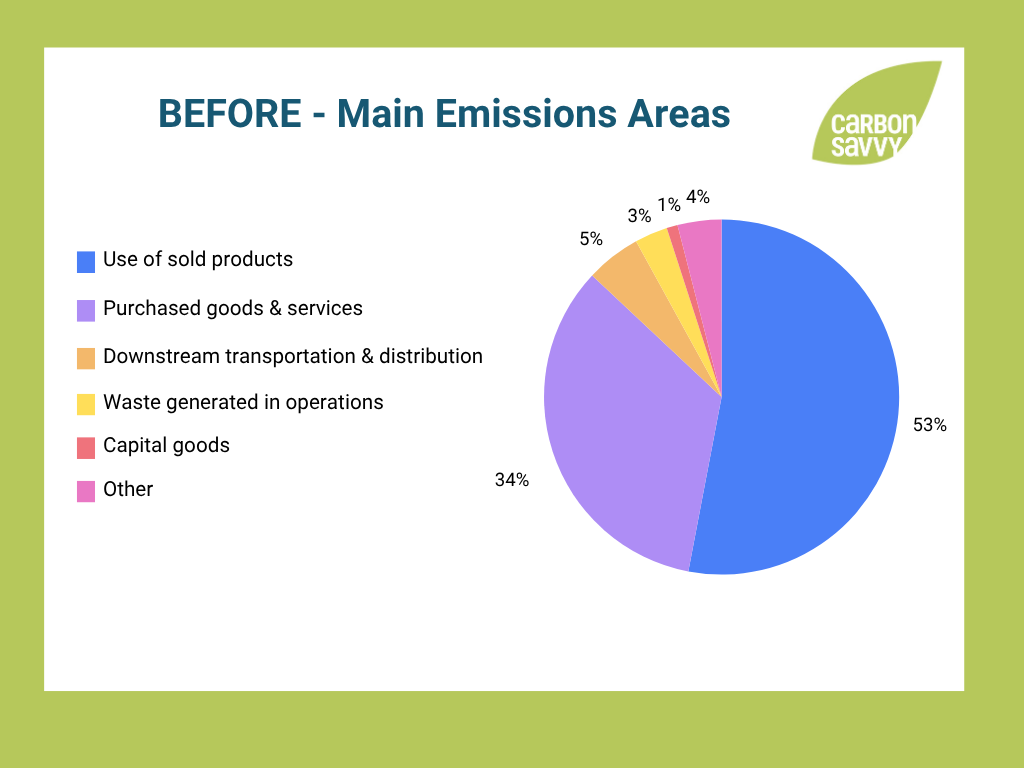
This manufacturer produces caravans and motorhomes. Their baseline carbon footprint was 81,000 tonnes of CO2. With 467 employees and a turnover of £101m, their carbon intensities are 173 TCO2/employee and 797 TCO2/£m. Every industry has its own carbon characteristics, and we can see that manufacturing inherently creates high emissions because producing and fabricating materials emits a lot of CO2. For Marvellous Manufacturing, the main emission sources were: Use of sold products 53%; this is the CO2 emitted by the user during the life of the product – in this case, the petrol emissions for driving a motorhome. Purchased goods and services were 34% (because a lot of materials and components go into making a motorhome). Downstream transportation and distribution was 5%, which is delivery of the vehicles to customers; waste 3%; capital goods (like tools) 1%; and other areas 4%.
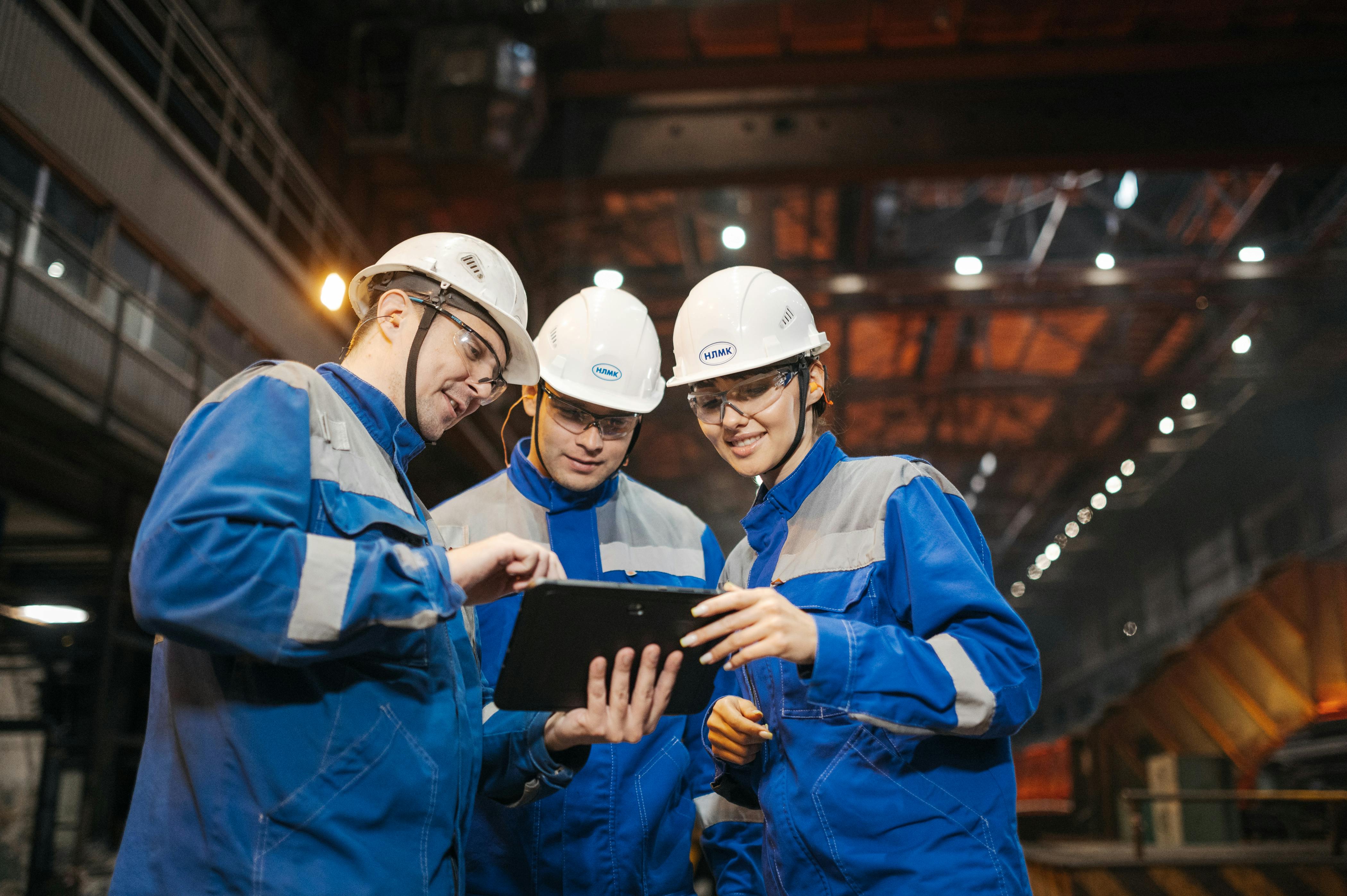
Workshopping with manufacturing engineers to reduce their carbon footprint as a supplier
Image: Sergey Sergeev, Pexels
For Marvellous Manufacturing, the main emissions sources were: Use of sold products, which means the CO2 emitted by the user during the life of the product (in this case, petrol emissions for driving a motorhome) 53%. Purchased goods and services were 34% (because a lot of materials and components are bought to make a motorhome. Downstream transportation and distribution (delivery of the vehicles to customers) 5%, waste 3%, capital goods (like tools) 1% and other areas 4%.
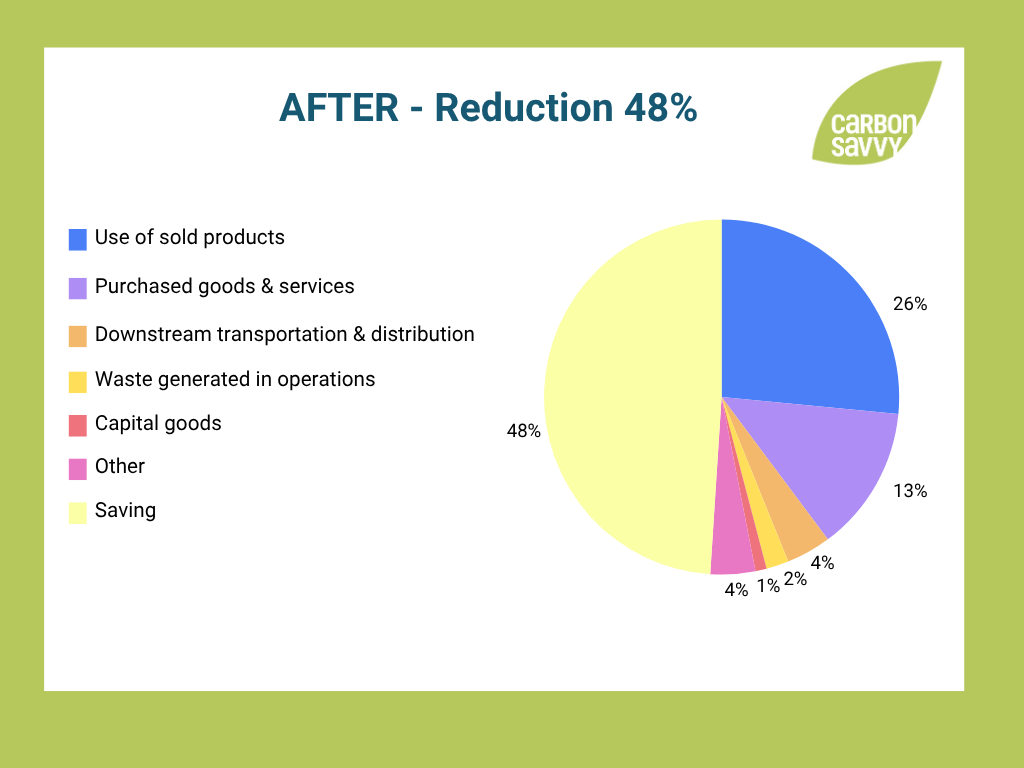
The top CO2-saving actions were, above all, redeveloping products to use less energy, which could save 26% of the company’s footprint if the petrol motors were switched to electric or hybrid. Encouraging suppliers to decarbonise and sourcing low carbon goods could save 20%. Working with distributors to increase their transport efficiency and reducing waste saved another 2%. After five years, the total saving was a whopping 48%!
Let’s take a look at the commercial advantages: Although product development takes some initial investment, being a market leader with electric and hybrid motorhomes could set the company apart from competitors and command premium prices. Even if only some of the vehicles are electric, this has marketing benefits. Similarly, using recycled materials in a vehicle can attract premium buyers, as shown by BMW’s i3 electric car, which incorporates many recycled materials. With commercial waste disposal in the UK at a particularly high cost, reducing waste and using recycled materials also has financial benefits.
Revolutionary Retail
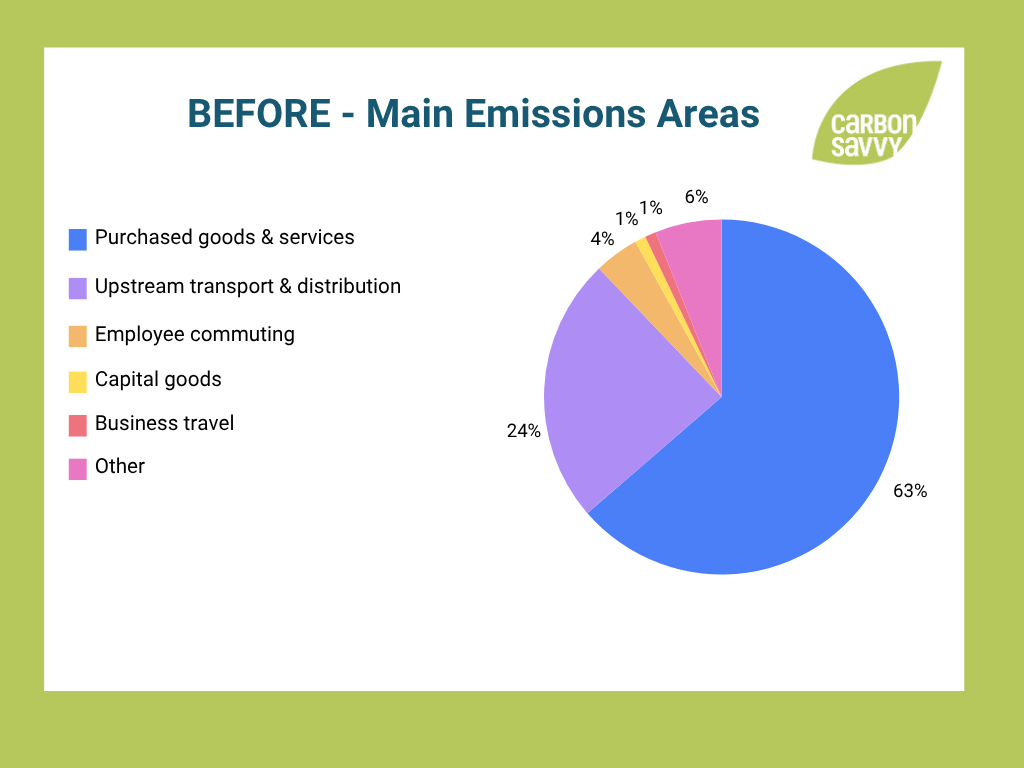
This retailer sells watches and watch straps both in the UK and globally. Their baseline footprint was 196 tonnes. With 16 employees and a turnover of £3.7m, their carbon intensities are 12.3TCO2/ employee and 53.5 TCO2/£m.
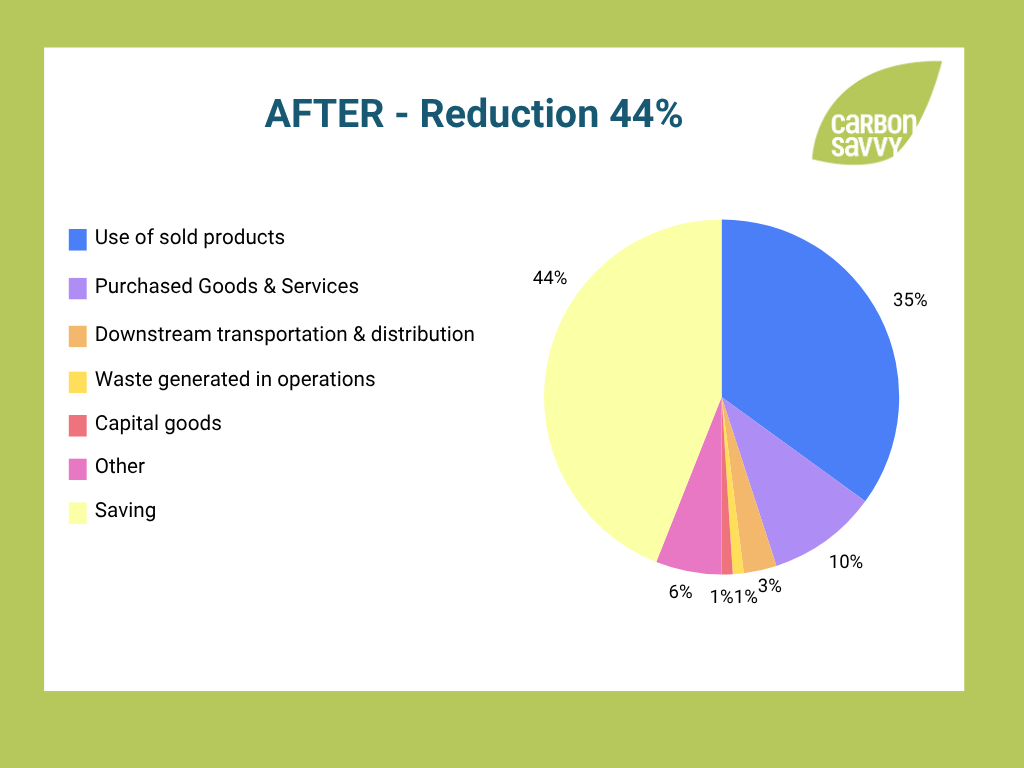
Their main emissions come from: Purchased goods and services 53%, upstream transportation and distribution 24%, employee commuting 4%, capital goods 1%, business travel 1%, and others 6%.
Their top five carbon-saving actions were: Encourage suppliers to decarbonise and source low carbon goods, saving 29%; switch to low-carbon transportation (e.g. from air to sea freight) and engage distributors on transport efficiency, 15%; and incentivise employees to use public transport, 1%. Implementing these actions over five years produced a revolutionary reduction of 44%!
In terms of commercial advantages, there were others apart from the overall brand reputation and customer and investor loyalty. (Global marketing reports indicate that today’s customers will pay more for sustainable products and punish companies with no social or environmental purpose.) Using recycled materials can cost 10-20% more (in the case of recycled plastics) but can also command premium pricing from a more loyal niche market. Transportation by sea freight has 98% lower CO2 emissions than air freight, and whilst being slower, it also costs less so is ideal for inbound shipments. Customers want quick delivery, so air freight may be necessary for outbound shipments, but a low-carbon delivery option would please eco-conscious buyers and enhance brand perception. Working with distributors to find transport efficiencies is likely to produce cost savings for all parties, and deepens supplier relations, which can have other benefits. Options to incentivise staff to take public transport are the same as for Amazing Architects. In an age when people look for meaningful work, a daily reminder of the company’s environmental aims can boost staff loyalty.
With three years to go to 2030, businesses, individuals and governments all need to play their part, and the most important thing about measuring a business footprint is that it gives you the information you need to reduce it. Whilst there are small steps companies can take without knowing their emissions, they will probably miss the most effective actions because, just like personal footprints, business footprints are often a surprise and even experts can’t predict them without doing a calculation. The hidden benefits of carbon saving include opening up new markets, cost savings and employee loyalty, and can even enhance health and wellbeing.
A big thanks to Carbon Savvy’s business footprinting partner Eoin McQuone for his fascinating insights. We hope you enjoyed finding out about real business footprints and what reducing them can look like.
Get started on the path to net zero today.
We can help your business or organization manage this process. For more information and to set up an enquiry call, contact Manon at info@carbonsavvy.uk.
If you know someone who runs a business or organization, send them this article and invite them to find out more.
Next steps
Sign up to our mailing list for more tips on enjoyable, low carbon living
Calculate your footprint for the first time or update it for the recent year
Send this article to a friend you think would enjoy it – Check out the ‘Share This Article’ options below!