
Making Business Footprints Easy
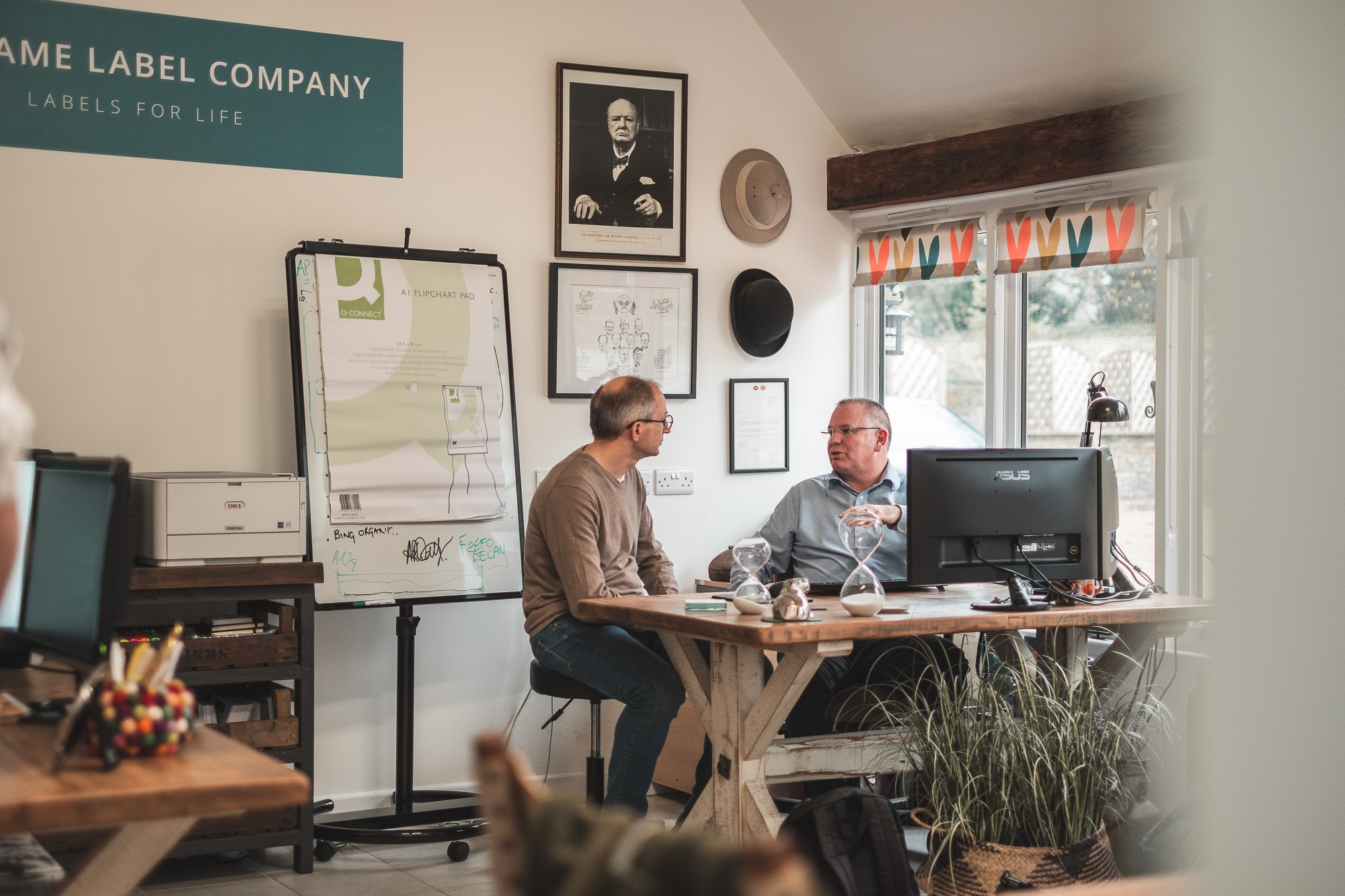
Go Climate Positive Meeting with Name Label Company
Image: Eoin McQuone
We talked to Carbon Savvy’s business footprint partner, Eoin McQuone from Go Climate Positive, about the greatest challenge for a business when calculating and reducing its carbon footprint, and how to make the process easy.
Carbon Savvy: What are the advantages for a business in choosing to work with a carbon consultant, instead of calculating their own carbon footprint with an online app or an in-house team?
Eoin McQuone: Firstly, a consultant ensures the calculation is done correctly, in line with current standards. Secondly, ironically, businesses that try to do it themselves often try to include too much detail and get bogged down. A good consultant helps manage the complexity of a business carbon calculation to get accurate results with minimum effort.
CS: How do you help businesses manage complexity?
EM: There are two traps businesses fall into. The first is trying to include everything in their first calculation. For example, a business asks all its suppliers what their carbon footprint is, and if some don’t know, the business thinks they can’t get started. The solution is to start with all the readily available data to get an estimate of the size and shape of your business footprint. That is all you need to spot the low-hanging fruit of carbon reductions. You can add more detail over time. The other mistake is to think that tackling your supply chain is too hard and ignore it completely. Most sources state that the supply chain represents 75% of a business’s footprint, so if you ignore it, you won’t get to grips with your real footprint.

An architectural firm meeting to calculate and reduce their business carbon footprint
Image: Thirdman, Pexels
The approach we take to managing complexity is to treat it like peeling the layers of an onion. We start with the data that’s easily available today, and calculate all the categories of emissions that are significant. Later on, we work on improving the accuracy of the most significant emission sources. It’s ok to use a rough estimate in an area that only accounts for 1% of your emissions, because it will be several years before that becomes significant. The key is to focus on improving the accuracy of the big areas first.
In this way, we don’t miss anything important and preserve time and energy to get on with the real job of reducing carbon. Going forward, the action plan then has two elements: Reducing carbon and improving data accuracy. As you knock off the big numbers, after a few years, it becomes more important to look at the smaller numbers.
CS: What can a business do if its suppliers don’t know their carbon footprints?
EM: Firstly, we rank suppliers by spend. We have invested in a database of international industry carbon intensities, which tells us, for example, the carbon footprint of spending 100,000 euros on metal parts from Germany. This gives us a good estimate of supply chain emissions without even contacting suppliers.
Next, we identify the top 20% of suppliers who account for 80% of the emissions, and find out if they publish their carbon intensities. (Carbon intensities are, for example, CO2 emissions per pound spent on a particular product area, such as paper or electronics.) Five of the top 20 suppliers might already publish their carbon intensities. We can then substitute a generic carbon intensity with a known carbon intensity, which is much more accurate. This process also tells us which suppliers are focused on carbon, so will help us reduce our footprint in the future. We use special software to trawl the internet for published carbon reports, further streamlining the process. As more businesses publish their carbon footprints, the accuracy of all calculations improves.
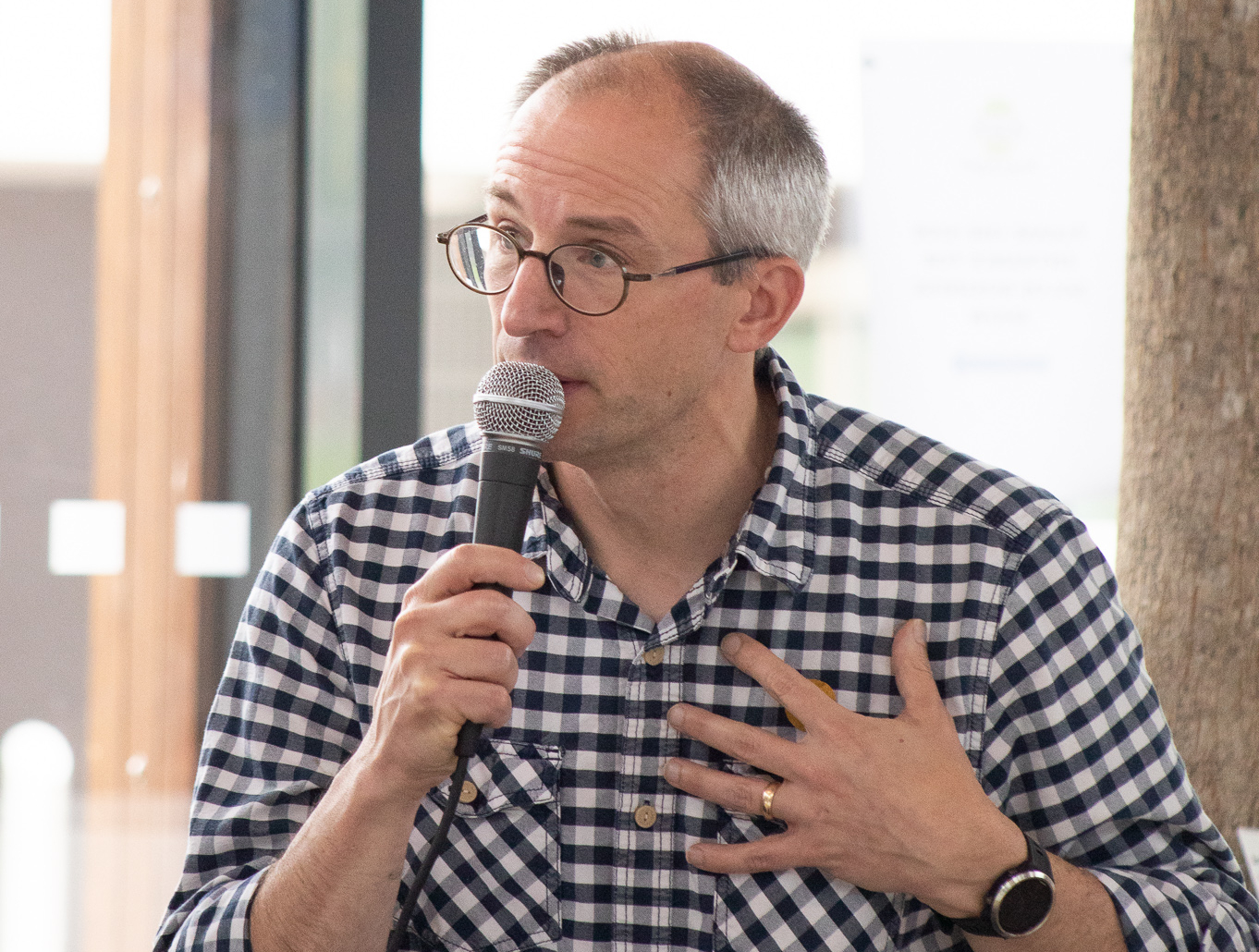
Eoin McQuone speaking at the South Gloucestershire Business Show
Image: Eoin McQuone
CS: Where do suppliers publish their carbon intensities?
EM: Sometimes on their own website – look for “Carbon Reduction Plan”, “Sustainability Report” or “Impact Report.” Or on the CDP (Formerly Carbon Disclosure Project) website. Accessing CDP data may require a fee depending on who you are and the intended use. Data Licenses – CDP
CS: Can you help businesses to communicate with suppliers?
EM: Yes, we have a toolkit with a questionnaire to ascertain a supplier’s relationship to carbon reduction. If they already calculate their emissions, we use their data. If not, we run workshops to demystify the process, show them it’s not as complicated, hard or expensive as they probably think, and that there are real business benefits to be gained. Ultimately, the goal is to get them make a start themselves.

Workshopping with manufacturing engineers to reduce their carbon footprint as a supplier
Image: Sergey Sergeev, Pexels
CS: We would love to talk to you about the business benefits of measuring your carbon footprint – next time! – A big thank you to Eoin McQuone for these fascinating insights.
Here’s to the beautiful, low carbon businesses of the future,
Mukti and the Carbon Savvy team
Get started on the path to net zero today.
We can help your business or organization manage this process. For more information and to set up an enquiry call, contact Manon at info@carbonsavvy.uk.
If you know someone who runs a business or organization, send them this article and invite them to find out more.
Next steps
Sign up to our mailing list for more tips on enjoyable, low carbon living
Calculate your footprint for the first time or update it for the recent year
Send this article to a friend you think would enjoy it – Check out the ‘Share This Article’ options below!