
The Greenest Energy Is the Energy We Don’t Waste
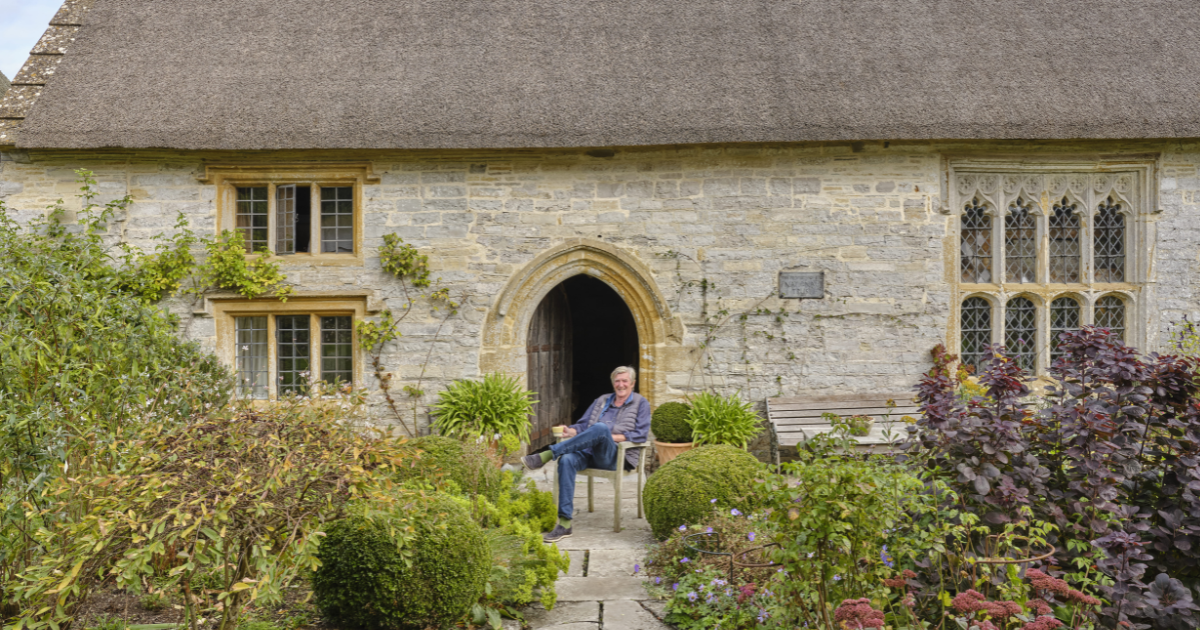
Britain’s heritage properties are an important part of reaching Net Zero
Image: Mitchell & Dickinson
We often think about carbon reduction as work to be done ‘out there’, but what if it started right within the walls of our own homes? With Tom Coles at the helm for the last seven years, Mitchell & Dickinson has overseen the insulation of 2,500 historic properties, stopping 150,000 tonnes of CO₂ from leaking out of Britain’s older houses. Below, Tom reflects on how his work with leaders in carbon reduction has shaped not just his professional commitment, but his personal lifestyle – from insulating his family’s own period cottage, to low-carbon road trips across France, and the everyday conversations about the planet he has with his young sons.
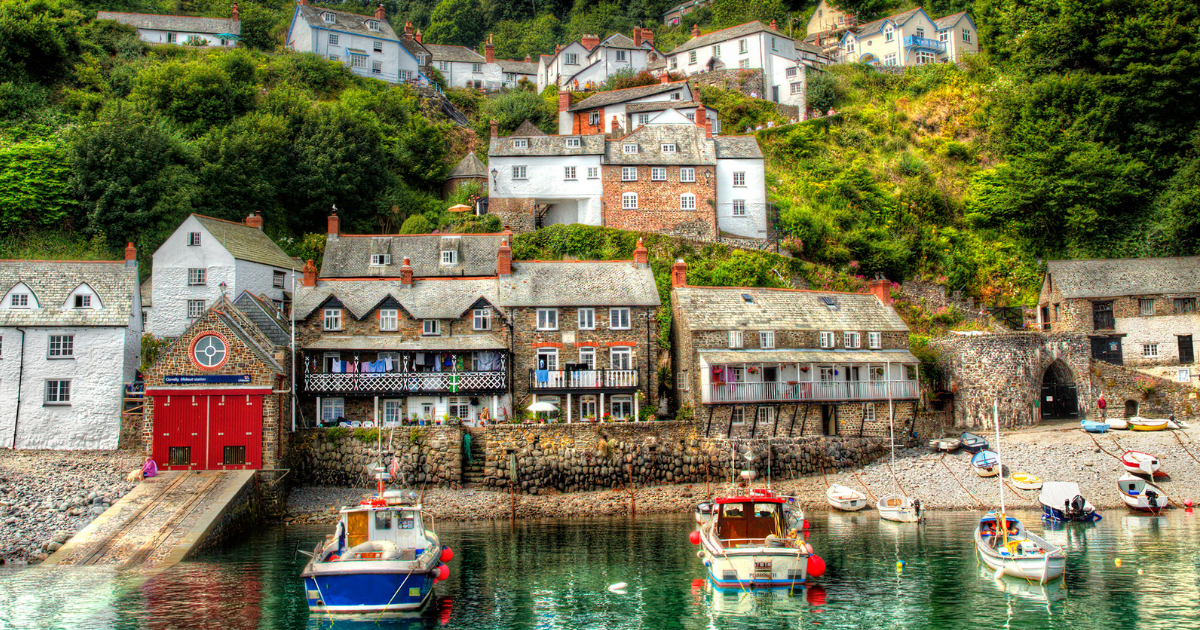
Mitchell & Dickinson insulated the entire heritage village of Clovelly, Devon
Image: Mitchell & Dickinson
Mukti Mitchell: How do you feel after seven years leading one of the UK’s eco companies?
Tom Coles: It has gone quickly, and a lot has happened. I’m proud of increasing our staff base and approaching 2,500 properties insulated. When I took over, I wanted to grow the business and prove that insulating heritage properties can have a real influence on saving CO₂. I am pleased that we have achieved those goals, as well as offering our employees career pathways that help them develop their professional practice.
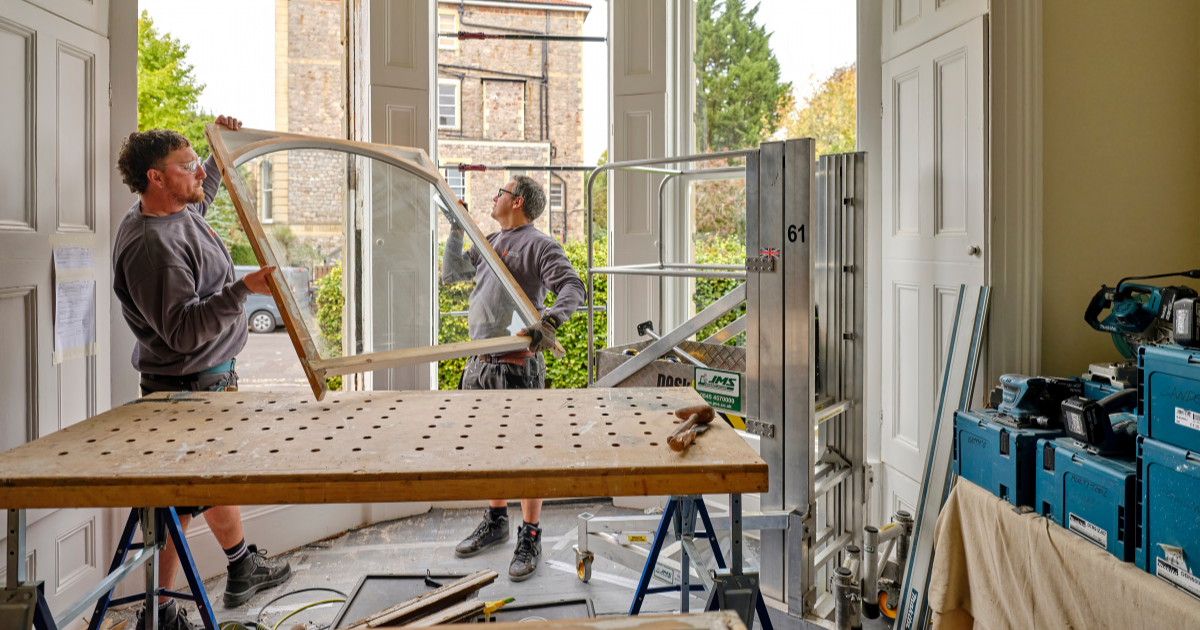
Training craftsmen is critical for retrofitting hard-to-treat properties
Image: Mitchell & Dickinson
MM: What developments have you seen in the world of retrofitting and carbon saving?
TC: The world of retrofitting has changed before our eyes, and Mitchell & Dickinson, as an established company, has brought it to more people’s attention. The result is that retrofitting has moved from a niche concern to a mainstream issue.
Retrofit language has become increasingly common on the radio and television, and our customers are more confident using it. Our institutional clients now have job titles like ‘Environment Manager’, ‘Sustainability Manager’, ‘Energy Manager’, or ‘Carbon-Saving Manager’. Everyone has got used to discussing carbon and net zero targets, and it is now recognised that good retrofitting improves your comfort and health.
There is also an awareness that dealing with Britain’s architectural heritage is a critical aspect of saving CO₂. Importantly, building managers are more aware that retrofitting can have unintended consequences if not done correctly.
.
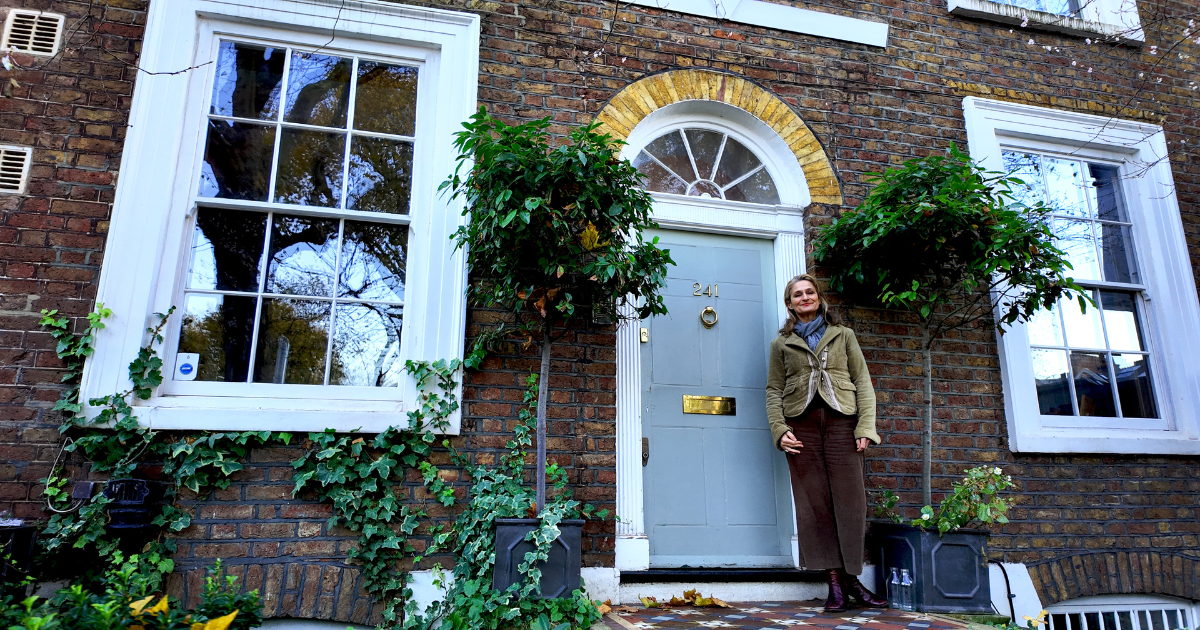
Mitchell & Dickinson now cover London and all of Southern England & Wales
Image: Mitchell & Dickinson
MM: Have customers changed?
TC: We now work in London, where custodians of listed and period properties can be younger. All our customers are better informed and confident about discussing their retrofit, which I suspect is partly due to AI and the ease of doing research.
During COVID-19, two things happened: People started working from home and thinking, “I’m cold sat behind this desk, these windows are rattling, I’ve got my heating on full blast, and I’m only sat in one room – I need to sort this out.” People who migrated from the city to the countryside found themselves living in older properties, but they still wanted the same level of comfort. Some of them had more disposable income to spend on improving their home.
The other major shift is that, on the whole, our customers are much more aware of the impact of climate change on the environment, so they understand our messaging better.
.
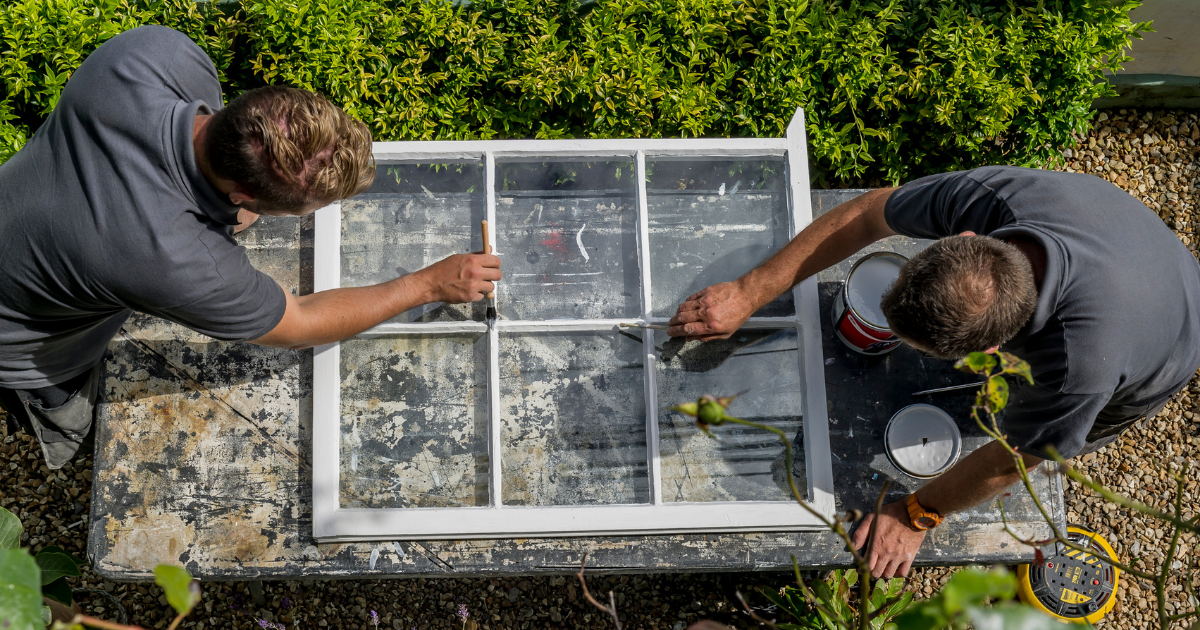
Insulating a typical home takes 2-3 weeks and can reduce heating bills by 50%
Image: Mitchell & Dickinson
MM: On a more personal note, how do your eco values affect your life outside work?
TC: We all make decisions around purchases, food and holidays and marry those decisions up against a set of criteria. Eco values have definitely made their way to the top of that criteria for me. It’s come about from a better understanding of both climate change and my own carbon footprint. The awareness came from working with people like yourself, Mukti, and more recently Dan Raymond Barker, our Director of Carbon Management.
A major benefit is that this has allowed me to have great conversations with my children. My boys are now 11 and 12 and are becoming pretty switched on to what’s going on in the world – understanding how conflicts are connected to fossil fuels and how the energy crisis affects people.
All this has enhanced my desire to do practical day-to-day things like eat organic food, drive an electric car and upgrade the insulation and ventilation in our own period cottage. Recently, for our summer holidays, we enjoyed taking the electric car to France, loaded with surfboards and bicycles on the back. We discussed it on the journey, took the ferry, and had a great adventure.
.
MM: What do you most enjoy about your job?
TC: As well as being passionate about our carbon saving, I enjoy seeing our employees develop. We talk about a ‘company family’ during interviews, and I take personal pride in proving that we genuinely mean it. I enjoy getting to know people, understanding what makes them tick and seeing them develop their skills, confidence and responsibilities. It’s very rewarding to see people progress and know that we’ve played a part in helping them build better working and personal lives.
We also get excellent customer feedback, and what makes me really proud is when our customers talk about the level of care and attention our company has provided them and how our products have had a positive impact on their lives.
.
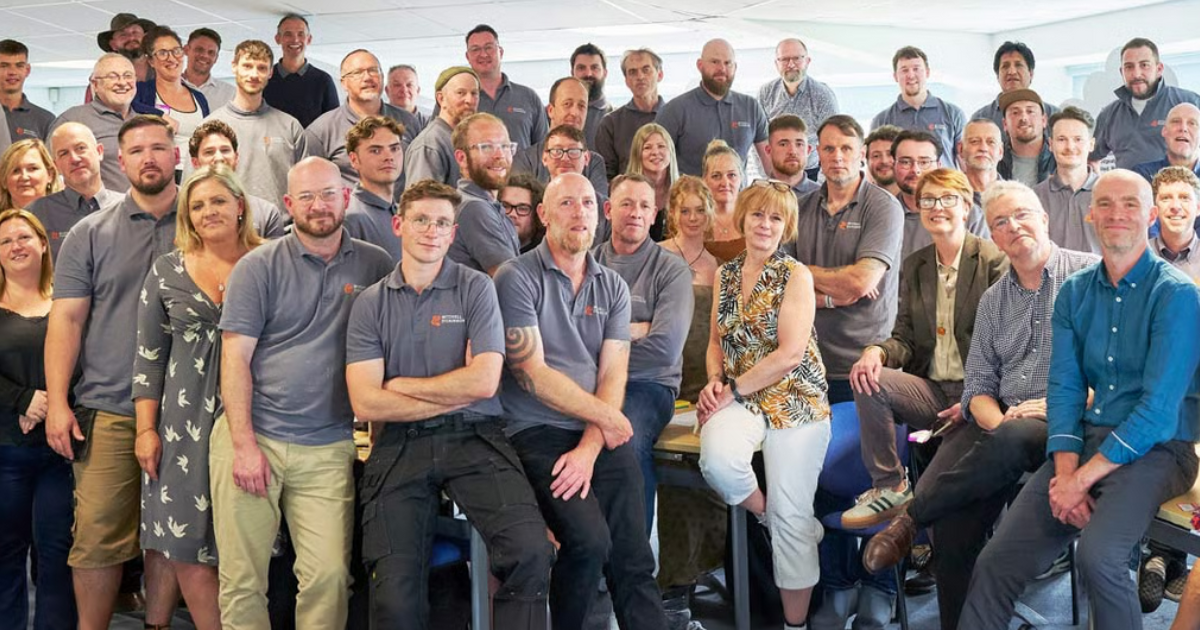
Tom Coles (bottom right) and the Mitchell & Dickinson team
Image: Mitchell & Dickinson
.
MM: Any new developments at the company?
TC: We have broadened our product range in several areas: We have a much greater understanding of how insulation should be balanced with ventilation, and we include ventilation products in our surveys, as well as working with our partners to install them.
We offer a deeper level of restoration as part of our mission to preserve Britain’s architectural heritage. We also have new products such as wood fibre boarding, vacuum glazing and a more comprehensive new joinery service.
Our mission to reduce carbon emissions is still held dear, but we have progressed from solely mitigation to include adaptation. Buildings are heating up in the summer, so we now design solutions that help buildings remain cool during the heat waves as well. We talk to our customers about passive as well as mechanical ventilation and offer a range of plantation and insulated shutters to help prevent homes from overheating.
.

Mitchell & Dickinson’s CosyGlazing can fit any shape of window
Image: Mitchell & Dickinson
MM: What are the main obstacles to retrofitting, and how do you deal with those?
TC: The biggest challenge is employing people with the right skills and training them while also running a business. We address this by recruiting people with a passion for either the environment, architectural heritage, or both, and then providing an ongoing training programme for every craftsperson who joins us. I carry out every appraisal for our operations team personally. We have to budget for a level of training that not all companies do, which is an investment in the future.

MD Tom Coles puts emphasis on developing employees’ professional practice
Image: Mitchell & Dickinson
MM: What one thing would you change in the UK to improve things for a company like Mitchell & Dickinson?
TC: Over the seven years that I have been Managing Director, I have seen that messaging from central government has a direct impact on our customers. With changes in governments and prime ministers, this has fluctuated. If the messaging on climate change, net zero and saving energy leaking from buildings were clearer, and if the incentives were stable and worked for listed properties, it would certainly help us.
.
MM: What are your aspirations for the company and retrofitting in the coming years?
TC: We have a really good system, skillset and set of products that would have equal value to people in the North of the country, so I am keen to expand our geographical area. I want to develop our advisory service for customers, and I would like to be able to share the skills we have developed over the company’s seventeen years of work with other professionals, owners and landlords to help them make good decisions on retrofitting. Finally, I would like our company to be an example of how to insulate heritage properties sensitively as well as how a skills-based business can have really good eco and ethical credentials.
A big thank you to Tom for talking to us about carbon saving in ancient buildings. Mitchell & Dickinson was the founding sponsor for Carbon Savvy and part of our genesis, so we also thank Tom and the team for their unwavering support over the last seven years.
Find out more about insulating and retrofitting your traditional property with Mitchell & Dickinson
Here’s to comfortable and healthy ancient buildings with small carbon footprints!
Mukti & the Carbon Savvy Team
Next steps
Sign up to our mailing list for more tips on enjoyable, low carbon living
Calculate your footprint for the first time or update it for the recent year
Send this article to a friend you think would enjoy it – Check out the ‘Share This Article’ options below!